The Fragmentation of the Search Market in 2026: The End of the Google Monopoly?
For over two decades, “searching the web” was synonymous with a single destination: Google’s iconic white search bar. In 2026, this paradigm is undergoing a profound evolution. We are witnessing a progressive fragmentation of the search market, where information discovery no longer relies on a centralized point of entry but instead becomes a distributed, often invisible functionality integrated into operating systems, applications, and AI agents.
This transformation does not signal the collapse of Google, which remains dominant in query volume, but rather the erosion of its exclusive role as the universal gateway to the web. Between the rise of ChatGPT Search and the native integration of contextual search via Apple Intelligence, the “answer economy” is redrawing historical balances.
Search as a Feature, Not a Destination
The structural shift of 2026 lies in the integration of search at the operating system and application levels. With Apple Intelligence, search has become a contextual layer capable of understanding what is on the screen, the user’s intent, and their immediate environment.
Users no longer need to open a browser or explicitly formulate a query. The system’s assistant orchestrates the response by drawing from multiple sources, transforming what was historically “referral traffic” to the web into internal destination traffic, captive within the ecosystem.
Apple is not replacing traditional search engines; it is disintermediating the user interface. Search is becoming ambient, integrated, and largely invisible to the end user. This mutation directly extends the analysis found in The Sovereign Media Era: the advent of a “zero-click” world where information is consumed exactly where the user is, without the need for a web page visit.
ChatGPT Search: A New Challenger for High-Value Queries
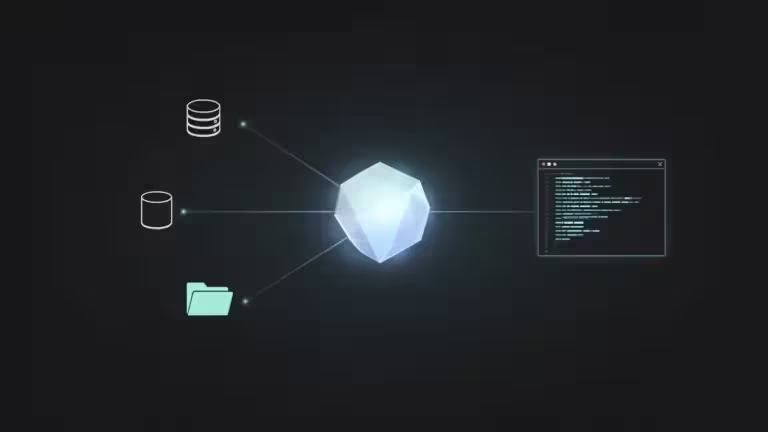
OpenAI has reached a decisive milestone with ChatGPT Search. By combining the reasoning capabilities of Large Language Models with real-time web access via Retrieval-Augmented Generation (RAG), ChatGPT is capturing a growing share of complex, comparative, and high-commercial-intent queries.
Unlike the traditional engine based on lists of blue links, ChatGPT Search synthesizes answers, contextualizes information, and cites its sources. For many use cases, particularly decision support or product comparisons, this approach makes the traditional results page significantly less attractive.
OpenAI is also exploring ad formats integrated into conversations. The goal is clear: offset high compute costs while reproducing a monetization logic similar to Google’s, but within a more intimate and engaging conversational interface.
Fragmentation vs. Centralization: The Impact on Publishers
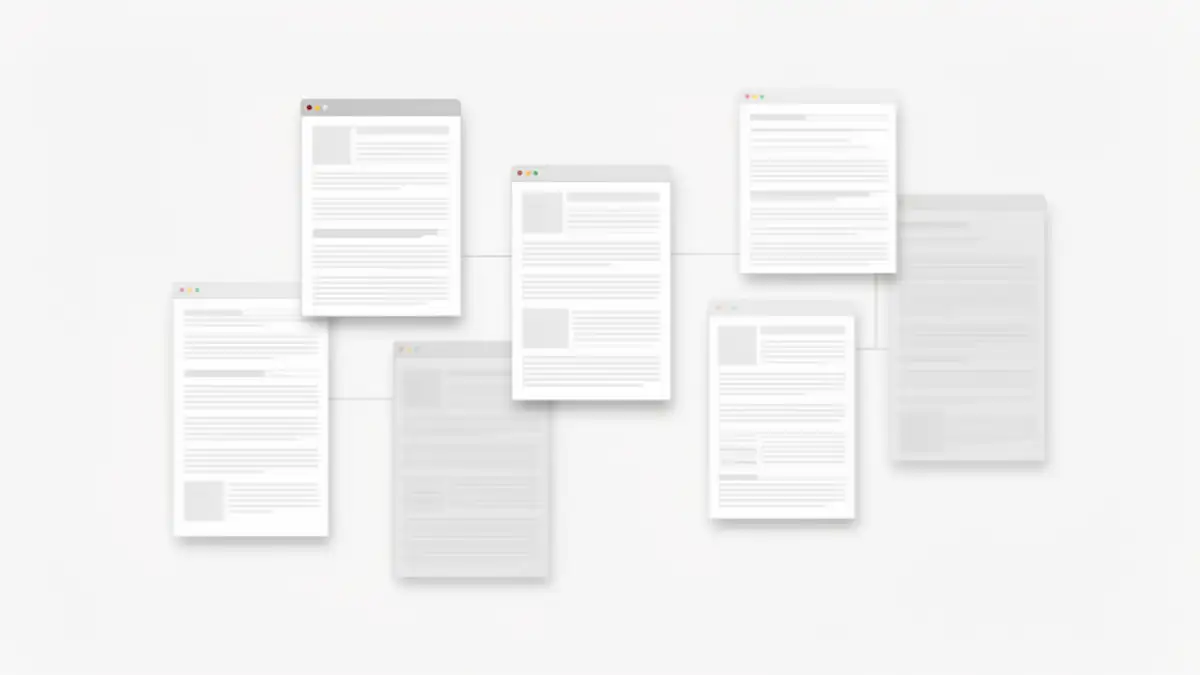
For niche publishers, this fragmentation represents a strategic turning point. On one hand, the historical dependency on a single algorithm is diminishing. On the other, maintaining visibility is becoming more complex in a splintered environment: traditional engines, conversational assistants, and platforms like Perplexity, ChatGPT, or OS-level interfaces.
In this context, keyword optimization is no longer enough. To be selected and cited by AI agents, content must inspire trust. This is the core purpose of the Trust Stack (C2PA, JTI, and Blockchain), which provides AI systems with actionable signals of authority, provenance, and reliability. Editorial certification is becoming the new lever for visibility, much like SEO dominated the era of blue links.
Towards a Multi-Portal Web
Google’s monopoly will not vanish overnight. In 2026, it remains the central player by volume, but it now operates within a multi-portal ecosystem, where search is everywhere and the search engine is nowhere.
The publishers who succeed will be those who recognize that their content is now informational raw material designed to feed multiple AI agents. This value can be monetized through new mechanisms, specifically AI revenue pools and usage-based micro-payment models, such as those offered by TollBit or Perplexity.
In this new landscape, the click is no longer the primary unit of measurement. Value lies in presence, citation, and certified exploitation of content within a distributed cognitive architecture. The future of the web is no longer played out in conquering the top spot on a results page, but in the ability to become a reference source for search systems that are omnipresent, yet invisible.
Your comments enrich our articles, so don’t hesitate to share your thoughts! Sharing on social media helps us a lot. Thank you for your support!